
A stack is the natural tool wherever "the last item in comes out first". This lesson covers five classic uses: brackets, RPN, undo/redo, DFS and a monotonic stack. The stack itself was built in the previous lesson (stack implementation); here a plain list is enough.
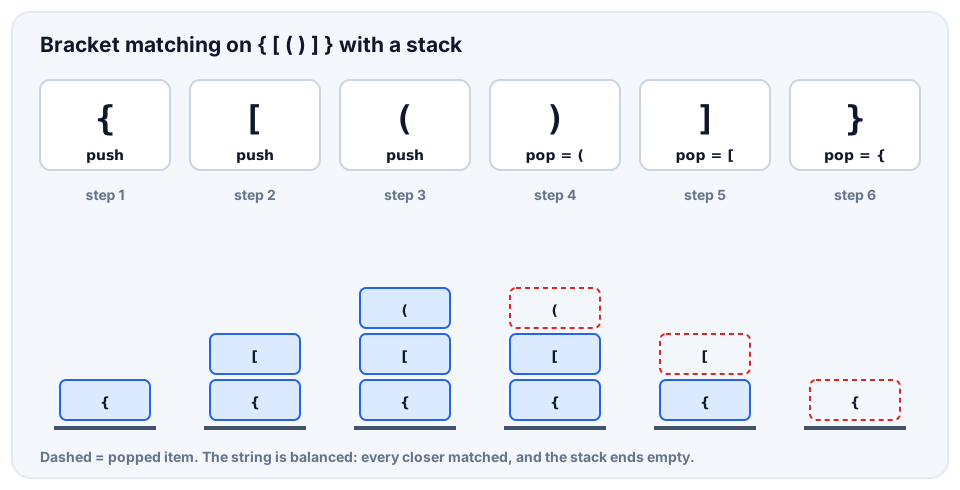
Checking brackets
An opening bracket is pushed. On a closing one we pop the top and check the pair. Three kinds of failure: the pair does not match, a closer meets an empty stack, openers remain at the end. The string is balanced only if none of these happened and the stack is empty. Time O(n), memory O(n).
PAIRS = {")": "(", "]": "[", "}": "{"}

def balanced(s):
    stack = []
    for ch in s:
        if ch in "([{":
            stack.append(ch)
        elif ch in PAIRS:
            if not stack or stack.pop() != PAIRS[ch]:
                return False
    return not stack

for s in ["{[()]}", "([)]", "((", ")("]:
print(s, balanced(s)){[()]} True
([)] False
(( False
)( False