
Most linked-list problems use a few techniques: rewiring the next pointers, two pointers (slow/fast or with a gap) and a dummy head. The Node class is familiar from the linked lists topic: Node(value, next).
Helper functions
For tests it is handy to build a list from an array and convert it back.
class Node:
    def __init__(self, value, next=None):
        self.value = value
        self.next = next

def build(items):
    head = None
    for v in reversed(items):
        head = Node(v, head)
    return head

def to_list(head):
    out = []
    while head:
        out.append(head.value)
        head = head.next
    return out

print(to_list(build([1, 2, 3])))[1, 2, 3]Reversing a list
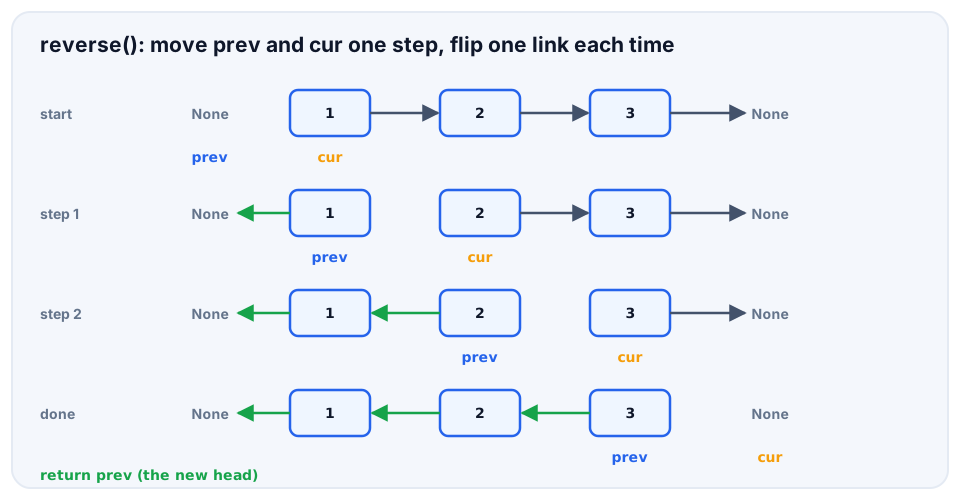
Keep three pointers: prev (the head of the already reversed part), head (the current node) and nxt (the next node that must not be lost). On every step point head.next at prev. Time O(n), memory O(1).
def reverse(head):
    prev = None
    while head:
        nxt = head.next
        head.next = prev
        prev = head
        head = nxt
    return prev

print(to_list(reverse(build([1, 2, 3, 4]))))
print(to_list(reverse(None)))[4, 3, 2, 1]
[]💡 Write
nxt = head.nextbeforehead.next = prev, otherwise the rest of the list is lost.
