
Layers
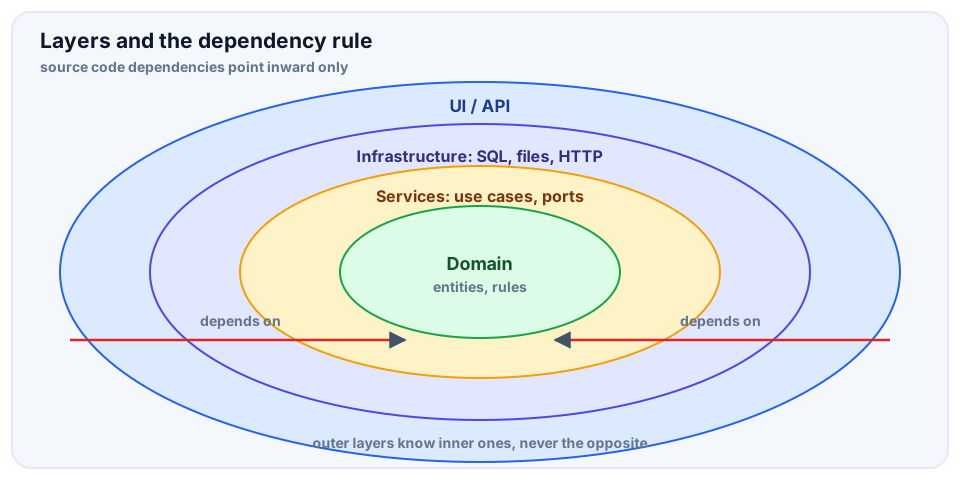
Splitting a large program into layers makes every part do one job:
- Domain: entities and business rules (
Task.complete()); depends on nothing (no DB, no web). - Services (use cases): scenarios such as "create a task", "complete it"; they coordinate the domain and repository interfaces.
- Infrastructure: DB, files, HTTP, email: all the "outside" details.
- UI / API: CLI, web pages, REST: talking to the user.
Related: SRP, coupling and cohesion.
The domain layer
Domain classes are plain Python objects: the rules live inside them and they know nothing about the database. That is why they can be tested in seconds.
from dataclasses import dataclass

@dataclass
class Task:
    id: int
    title: str
    done: bool = False

    def complete(self):
        if self.done:
            raise ValueError("task already done")
        self.done = True

t = Task(1, "write tests")
t.complete()
print(t)
try:
    t.complete()
except ValueError as e:
print("error:", e)Task(id=1, title='write tests', done=True)
error: task already done